

Advanced biomaterials developed at Coppe put Brazilian regenerative medicine a step ahead
Planeta COPPE / Metallurgical and Materials Engineering / News
Date: 16/10/2025
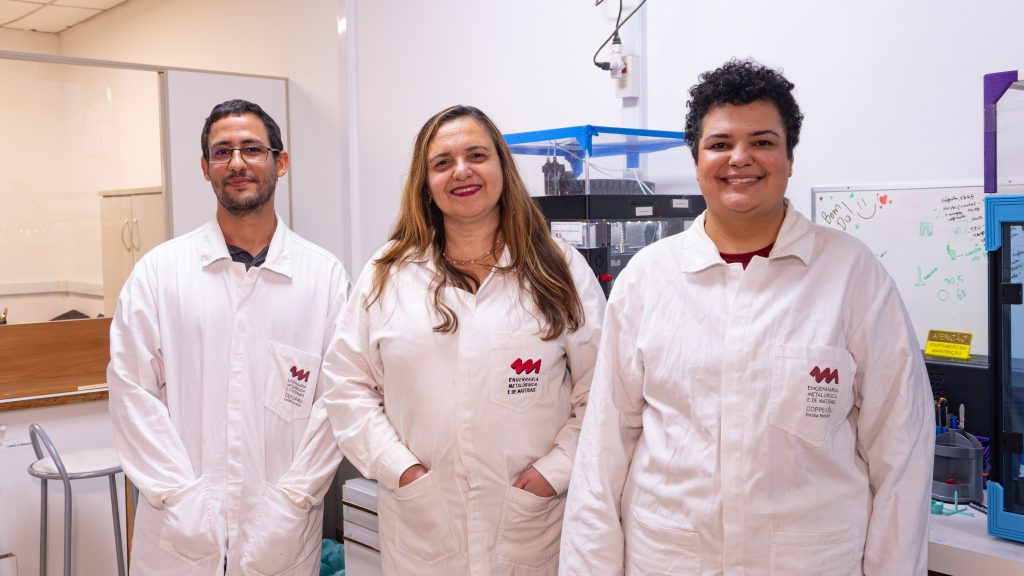
Researchers from Coppe/UFRJ’s Matallurgical and Materials Engineering Program (PEMM) are developing innovative techniques for the production of biomaterials aimed at bone regeneration. The research seeks to offer more accessible and biocompatible alternatives to traditional metal prostheses, contributing to the modernization and sustainability of the Brazilian health system.
In the Biopolymers and Bioengineering Laboratory (Biopoli), the team coordinated by Professor Rossana Thiré develops polymers structured with molecules capable of stimulating the body itself to regenerate bone tissue. The goal is for these materials to be used as temporary implants, replacing metal prostheses in cases of fractures and injuries caused by accidents or cancer.
In addition, the researcher explains, it is possible to incorporate drugs and antibiotics into the biomaterials, making them even more effective in treating infections and inflammations that can occur in cases of fractures. “These materials are biodegradable, integrate better with the body and, at the end of the process, disappear, leaving the patient’s bone regenerated and functional,” says Rossana Thiré.
Custom implants produced by 3D printing

Among the most promising lines of research is the development of customized polymeric implants, manufactured by 3D printing. Postdoctoral researcher Bruna Nunes Teixeira has been studying polymeric structures based on polylactic acid and polycaprolactone, with improved biological properties for bone tissue engineering. “Imagine a person who has suffered a motorcycle accident, with an open fracture leading to contamination. If the surgeon uses a polymer functionalized with antibiotic, in addition to filling the lesion, the implant releases the medication locally, preventing infections and reducing the risk of amputations,” explains Bruna.
.
Metallic grafts with better bone integration

Biopoli also investigates customized metal grafts for body regions that require high mechanical strength, such as the femur and face. Doctoral student Vinícius Oliveira dos Santos develops techniques to modify the surface of these implants, increasing their ability to interact with bone tissue and incorporating antimicrobial properties.
These implants are also produced by 3D printing and custom-designed, representing an important advance in the interface between materials engineering and personalized medicine. Part of the technology is developed in partnership with the Laboratory for the Synthesis of Ceramic Materials (LSMC), coordinated by PEMM Professor Paula Jardim.
Medicine 4.0: personalized and intelligent science

The research conducted at Coppe aligns with the principles of Medicine 4.0, which combines personalization, advanced manufacturing, and artificial intelligence. According to Bruna Teixeira, this technological convergence brings Brazilian research closer to the guidelines of the OECD – the Organisation for Economic Co-operation and Development – which guide the reduction in the use of laboratory animals in experiments and encourage the development of predictive models that are physiologically closer to the human body. “It is very difficult to transfer information from an animal to a human organism. With our models and devices, we can simulate interactions between proteins, viruses, bacteria and material surfaces, bringing the tests closer to the reality of human organs,” says the researcher.
This approach allows for the development of truly personalized, safer and more economically viable treatments that can be incorporated into the public and private healthcare systems in Brazil. “We are already experiencing the future of tissue engineering and organ regeneration in Brazil—with national technology that is accessible and applicable to the Brazilian reality,” Bruna emphasizes.
New research fronts in bioprinting
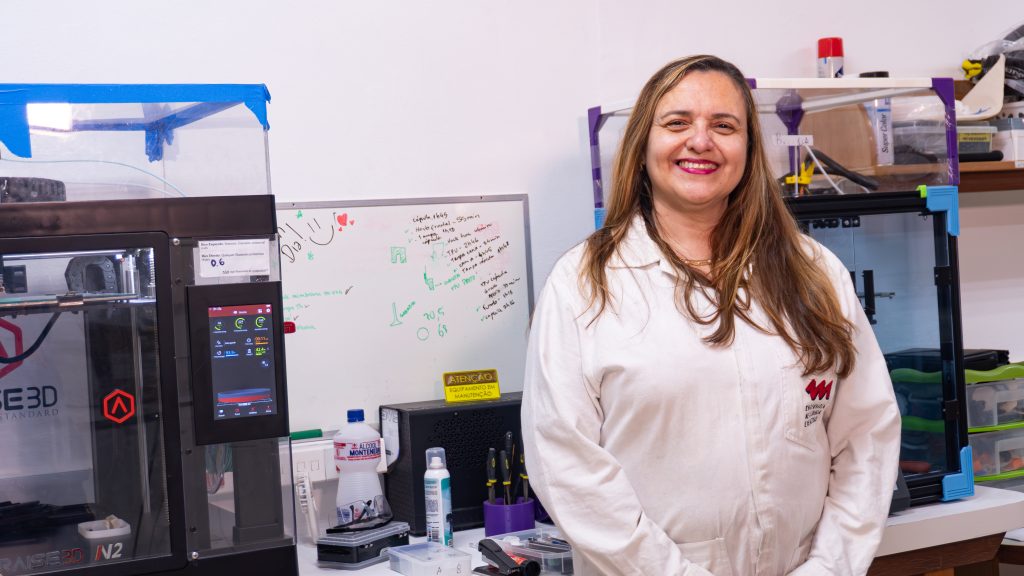
The advances achieved by the Biopoli group are driving new lines of research in the field of bioengineering. Professor Rossana Thiré is supervising the doctoral thesis of Carolina Barbosa de Andrade, entitled “3D Bioprinting of scaffolds containing hydrogel and cells for bone regeneration.” The study explores the use of bioprinting with living cells, expanding the potential application of biomaterials developed at Coppe.
With innovative solutions that combine sustainability, personalization and high technology, Coppe/UFRJ’s research reaffirms the institution’s role as a protagonist in health innovation.
The advances achieved at Biopoli, which is part of PEMM, show that it is possible to develop cutting-edge technologies in Brazil that improve the health system, reduce costs, and strengthen the country’s scientific and technological autonomy
