
Coppe joins international cutting-edge center on critical minerals
Planeta COPPE / Metallurgical and Materials Engineering / News
Date: 13/08/2025
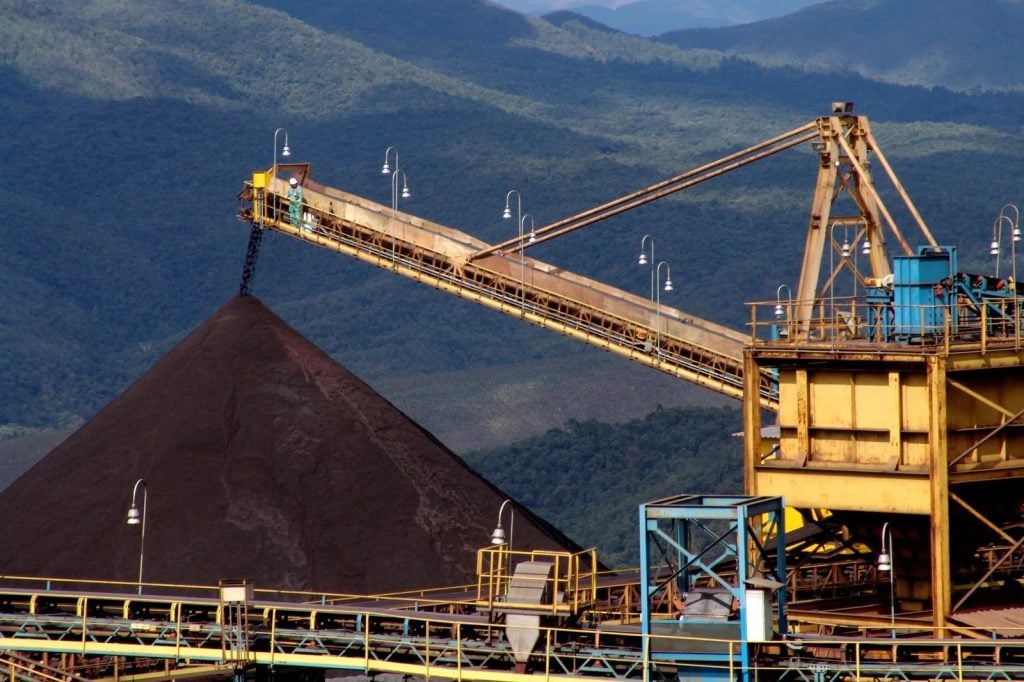
Coppe/UFRJ has been selected to join one of the seven Centers of Excellence under the prestigious National Critical Minerals Mission (NCMM), recently approved by India’s Ministry of Mines. With planned investments of USD 4 billion, the Centers of Excellence will develop state-of-the-art technologies to expand India’s — and its partners’ — scientific and technological capacity in the field of critical minerals. Funding will come from government R&D programs, industry, and venture capital investors.
Coppe’s participation represents a strategic step for Brazil, strengthening its national technological autonomy. In a global scenario marked by energy transition and competition for strategic mineral resources, this international cooperation seeks to reduce external dependencies and ensure the security of supply of essential raw materials — a factor directly linked to mineral sovereignty and economic development.
Coppe will participate in the center led by the Indian Institute of Technology (IIT) Dhanbad, through its Indian School of Mines (ISM), and by TEXMiN — an innovation hub under India’s Ministry of Science and Technology. Partners include Curtin University (Australia), the University of Cambridge (United Kingdom), other Indian IITs, research institutions, and technology-based startups.
According to Professor Marcelo Mansur, from the Metallurgical and Materials Engineering Program (PEMM), Coppe’s work may involve:
- Extraction of nickel and cobalt from lateritic ores, rich in iron oxides, hydroxides, and silicates.
- Recovery of critical metals such as cobalt, aluminum, nickel, and copper from lithium-ion batteries used in electronic waste and electric vehicles.
- Extraction of potassium from non-conventional sources for the production of NPK fertilizers, which contain the three main nutrients for crops: nitrogen, phosphorus, and potassium.
These stages include mineral characterization and beneficiation aimed at supplying material for specific processing routes, areas of expertise for Mansur and Professors Achilles Junqueira Dutra and Pedro Paulo Ribeiro, also from PEMM. Coppe’s initial team may expand to include other UFRJ researchers as well as Brazilian mineral sector institutions and companies.
Mansur emphasizes that the Brazil–India collaboration is strategic because it generates economic, academic, technological, and sustainable benefits, directly aligned with the global energy transition. The goal is to contribute to technological autonomy and strengthen the position of both countries in the global critical minerals chain.
The Center of Excellence
Operating under the Hub-and-Spoke model, the center led by IIT(ISM) Dhanbad integrates universities, innovation centers, startups, and industrial partners such as Hindustan Copper Limited and MOIL Ltd, which provide infrastructure, field expertise, and co-investment. This network accelerates the transformation of research into applicable solutions, from the laboratory to the market.
The seven NCMM centers focus on raw materials essential for sectors such as clean energy, electric mobility, electronics, defense, and space, with an emphasis on developing and implementing technologies at advanced maturity stages (TRL 7/8). Altogether, the program involves about 80 partners from industry, academia, and R&D, forming one of the broadest and most ambitious international collaborations in the field of strategic minerals.
What is the Hub-and-Spoke model?
In the Hub-and-Spoke model, a central core (hub) coordinates and connects multiple specialized partners (spokes), creating an integrated collaboration network. At the Center of Excellence, IIT(ISM) Dhanbad/TEXMiN acts as the hub, bringing together universities, research centers, startups, and companies — such as Coppe — to accelerate the development and application of technologies in critical minerals.
- Critical Minerals
- Fertilizers
- Hub-and-Spoke
- Materials Engineering
- Technological Autonomy
- TEXMiN
