Coppe scientists are among the Brazilians who most influence public policies in the world
Planeta COPPE / Energy / Energy Planning / Low Carbon / News
Date: 17/11/2025
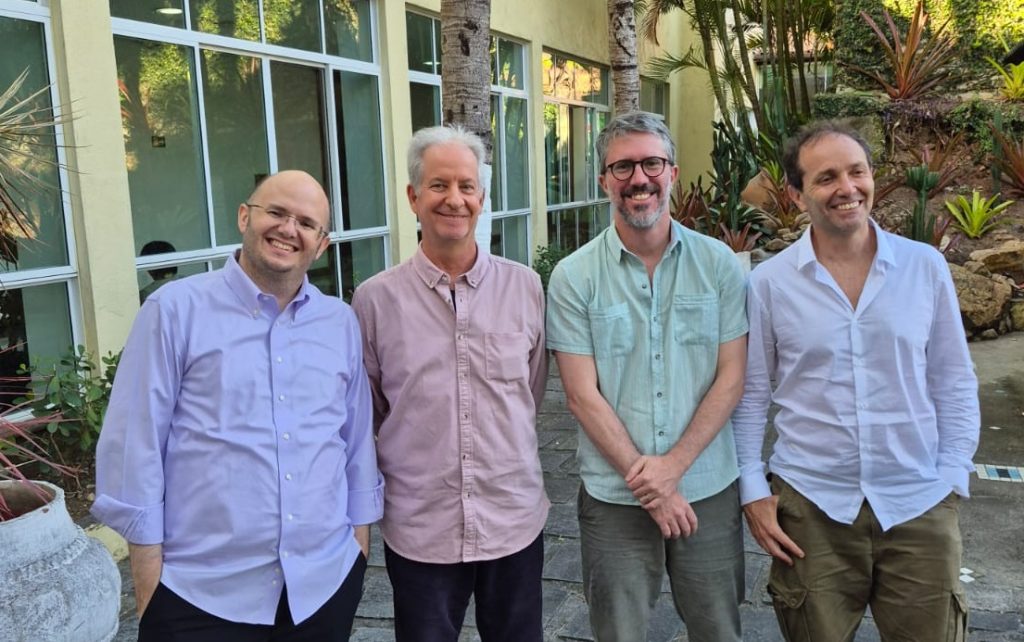
Four professors and one researcher from Coppe/UFRJ are among the 107 Brazilian scientists who most influence decisions and public policies on a global scale, according to a report released by Agência Bori, in partnership with the international platform Overton, a world reference in the analysis of the impact of science on public policies.
The study mapped over 150,000 strategic documents, technical reports and opinions used by governments, international organizations and civil society organizations between 2019 and 2025, identifying the researchers with the greatest presence in global political and strategic decisions.
UFRJ appears in second place nationally, with nine researchers in the ranking — among them, Coppe professors from the Energy Planning Program (PPE) Roberto Schaeffer, André Lucena, Pedro Rochedo and Alexandre Szklo, in addition to researcher Alexandre Köberle (currently a professor at the University of Lisbon), recognized for their contributions in the areas of energy, climate and sustainable energy transition.
In a specific analysis of documents related to Sustainable Development Goal (SDG) 13 – Climate Action, Agência Bori highlighted the strong presence of Coppe researchers, the National Institute for Space Research (Inpe) and USP.
Among the main references, the report cites the participation of Roberto Schaeffer, Pedro Rochedo and Alexandre Köberle in the “Emissions Gap Report 2022” by the United Nations Environment Programme (UNEP) — a key document in multilateral negotiations on energy transition and climate change mitigation.
The report also points out that, in the following years, topics such as energy transition, climate adaptation and food systems should gain even more relevance, accompanying the international agenda. Similarly, pressure on health systems and the pursuit of greater social equity should increase the demand for scientific evidence in areas such as chronic diseases, vaccines and health services.
The survey also draws attention to a challenge that needs to be addressed: among the 107 scientists mapped, only 22 are women, which reinforces the importance of promoting greater inclusion and representation in this field.
Coppe/UFRJ’s significant presence among the most influential researchers in the country shows that Brazilian science transcends borders and contributes directly to global decisions on energy, climate and sustainability. It is the knowledge produced in Brazil helping to build solutions to the planet’s challenges.