

Congress chaired by Coppe program presented advanced research for biomaterials and artificial organs
Planeta COPPE / Health Engineering / Metallurgical and Materials Engineering / News
Date: 18/09/2025
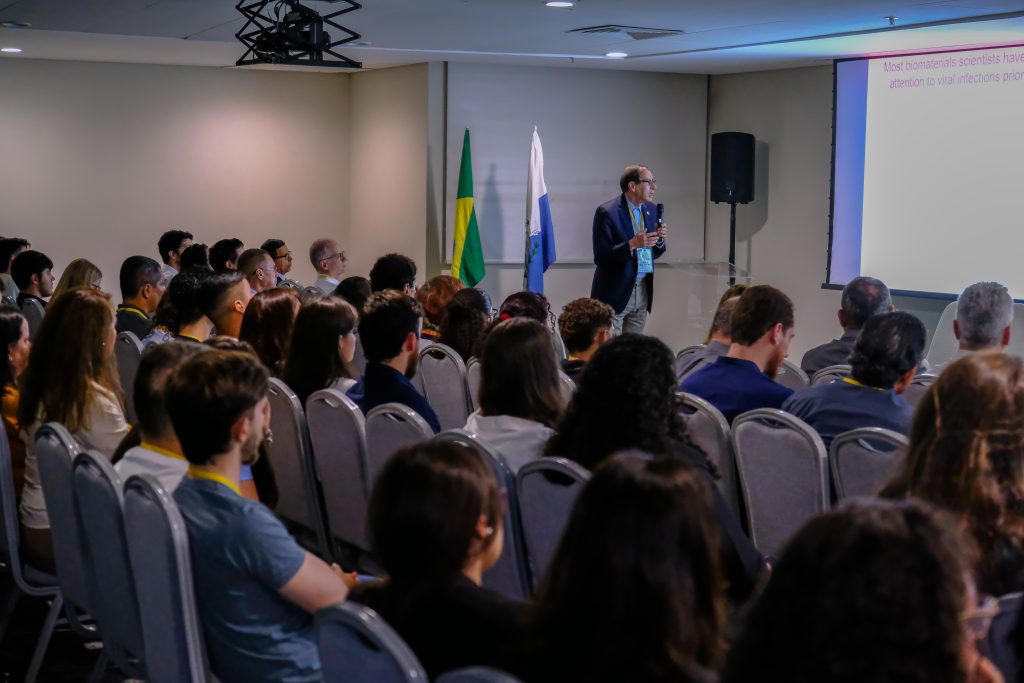
Coppe/UFRJ’s Metallurgical and Materials Engineering Program (PEM) provided a great opportunity to interact with renowned global experts in biomaterials during the 13th Latin American Congress on Artificial Organs and Biomaterials (COLAOB 2025). The event brought together renowned figures such as Professor Joachim Kohn, from the Rutgers University, who presented his studies that combine scientific innovation and artificial intelligence to develop materials for the regeneration and replacement of human organs. The congress was held in late August in partnership with the Latin American Society for Biomaterials, Tissue Engineering and Artificial Organs (SLABO).
Internationally recognized and president of the International Union of Societies for Biomaterials Science and Engineering, Kohn shared methods that drastically reduce the number of experimental tests required to develop new polymers, using neural networks and digital libraries. Their technologies have already impacted more than 350,000 patients in 46 countries. Among the international participants was also Professor Kattesh Katti from the University of Missouri (USA), recognized worldwide as the “Father of Green Nanotechnology.” He taught a pre-event mini-course focusing on key advances in the use of phytochemicals to synthesize biocompatible nanoparticles for therapeutic and molecular imaging applications.
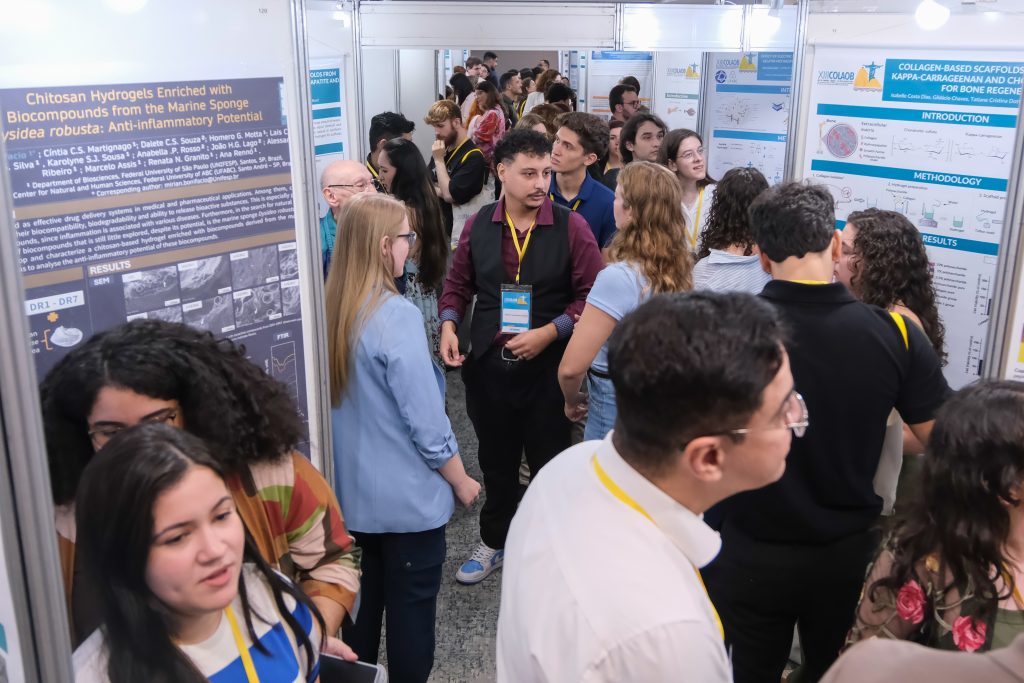
With over 60% of the 300-person audience comprised of undergraduate and graduate students, the event demonstrated Coppe’s commitment to exposing its students to the latest topics in global science, fostering direct exchanges with international experts and stimulating the development of a new generation of scientists.
Chaired by PEMM professors Rossana Thiré and Luiz Henrique de Almeida, COLAOB 2025 brought together researchers from several countries and featured lectures by renowned experts from the United States, Portugal, Italy, Argentina, Chile, India, China and Brazil to discuss advances in biomaterials, tissue engineering, regenerative medicine, and 3D organ printing—strategic areas for the future of personalized medicine.
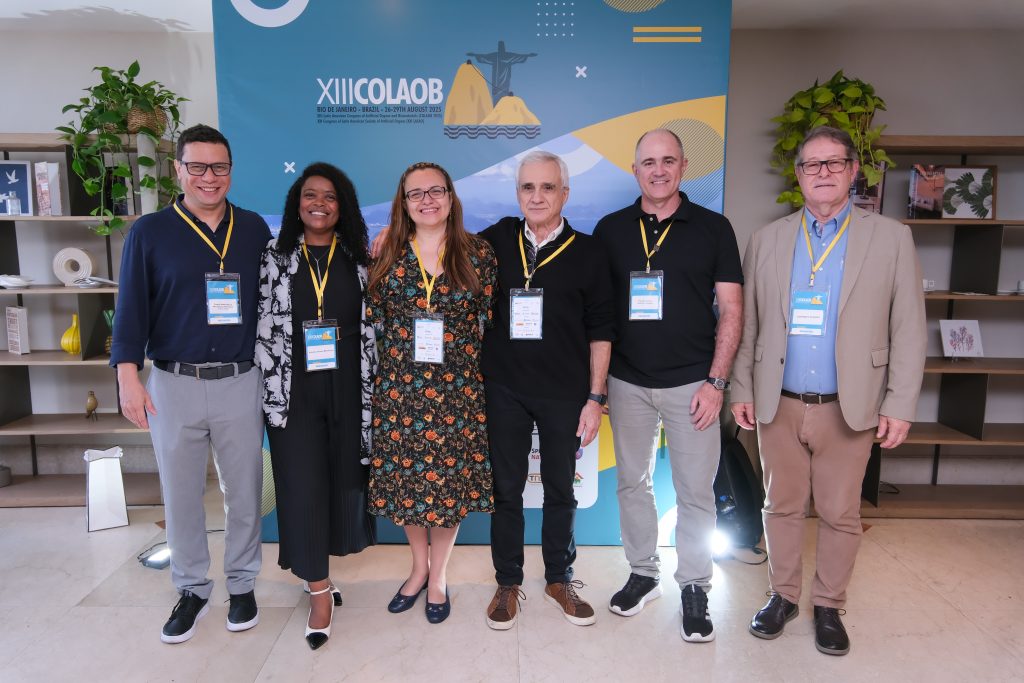
Professor Rossana Thiré highlighted the strong interaction between students and speakers as one of the initiative’s greatest strengths: “the students demonstrated great understanding and interest in what was presented, such as the current state of personalized medicine, Medicine 4.0, with 3D-printed organs. Such technologies are essential for reducing the number of animals used in laboratory research and for bringing the models used closer to human organs. This mission is already underway in Brazil, especially at Coppe.”
The event also marked the election of Rossana Thiré as president of SLABO (Latin American Society for Biomaterials, Tissue Engineering and Artificial Organs) and her appointment as Brazil’s delegate to IUSBE (International Union of Societies of Biomaterials Science and Engineering), reinforcing the leading role of Brazilian science on the international context.
