
A discovery which spans millions of years and reinforces the importance of Brazilian science. Researchers from UERJ, the National Museum (UFRJ) and Coppe/UFRJ have identified a new species of prehistoric fish, found at the James Ross Island, Antarctica. With approximately 66 million years of age, the fossil is considered the most well-preserved vertebrate ever located on the icy continent.
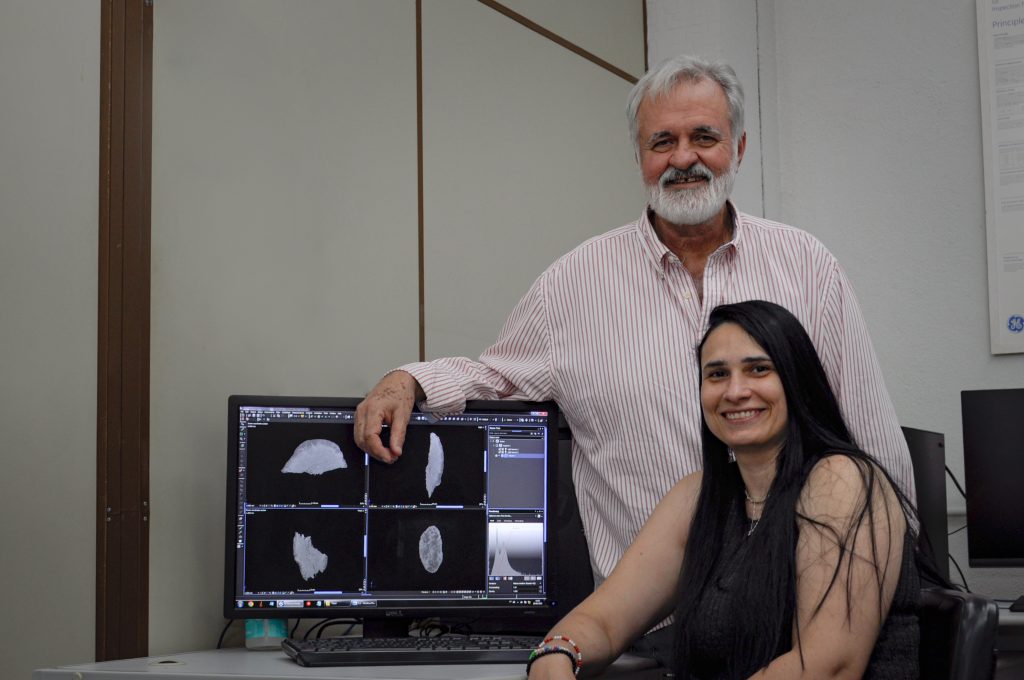
The study, which was published in Nature Scientific Reports and replicated in several national media outlets, not only expands knowledge about the biodiversity of the Cretaceous period but also helps understand climate change throughout Earth’s history. And technology was decisive: the fossil was characterized using computed microtomography at the Nuclear Instrumentation Laboratory (LIN) of the Nuclear Engineering Program, revealing details invisible to the naked eye.
A unique fish in the world
Baptized as Antarctichthys longipectoralis, the new species belongs to the dercetid family, fish with elongated bodies and long heads. But it has characteristics never seen before:
- A pectoral fin larger than that of the other members of the family
- A complete absence of teeth
These particularities were revealed thanks to microtomography, which allowed the skeleton to be virtually reconstructed layer by layer without damaging the original piece.
Technology that reveals stories
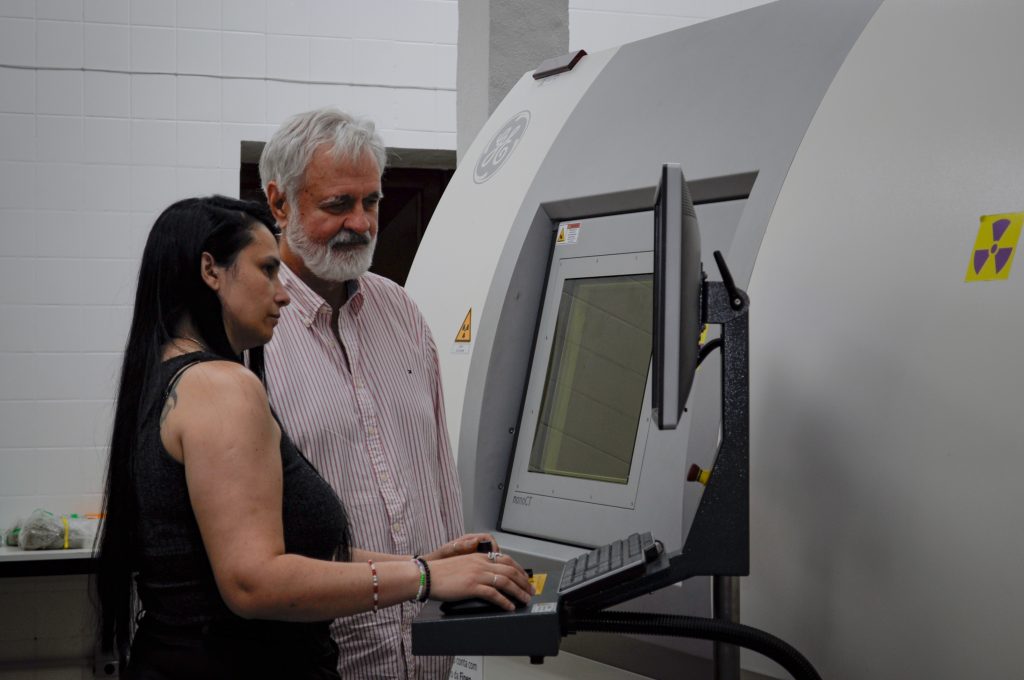
“At LIN, we develop techniques using ionizing radiation to investigate what the eye cannot see. We receive fossils, analyze them, and deliver images that allow experts to accurately characterize them,” explains Ricardo Tadeu Lopes, professor of the Nuclear Engineering Program at Coppe.
The process is complex: microtomography generates images in such subtle grayscale that only advanced technology can separate rock from bone. Each 3D reconstructed image digitally slices the material into tiny blocks—in the case of this fossil, 30 micrometers—allowing us to reconstruct the volume and reveal the entire bone structure.
“It’s as if we’ve given a new life to the specimen, allowing us to see it as it was millions of years ago,” adds Olga de Araújo, the postdoctoral researcher responsible for processing the images.
Recreating a lost world
With the information provided by Coppe, paleontologists were able not only to describe the new species, but also to reconstruct the Antarctic environment at the end of the Cretaceous period. 66 million years ago, the icy continent had temperatures between 20°C and 30°C, abundant vegetation (araucaria trees, pines, ferns) and a diverse fauna of fish, birds, reptiles and amphibians. The discovery reinforces the historical similarities between Antarctica and southern South America.
Science, technology and collaboration
This isn’t the first time the partnership between paleontologists and nuclear engineers has produced historic results. In 2021, the same collaboration led to the discovery of the dinosaur Berthasaura Leopoldinae, also published in Nature Scientific Reports. “When technology meets science, we reveal stories that have been hidden for millions of years. It’s a unique contribution to paleontology and to our understanding of the evolution of life on the planet,” concludes Ricardo Lopes.